Learning Nutrition; Improving Health,
Devchuli Municipality
A four-day Training of Trainers (ToT) on Child Nutrition under the framework of the NutriLearn
Project was successfully conducted in joint collaboration among Jagriti Child and Youth
Concern Nepal (Jcycn), KANALLAN, and Devchuli Municipality. The training was held from
November 2 to 5, 2025 (Kartik 16 to 19, 2082 B.S.) at Sauraha, Chitwan.
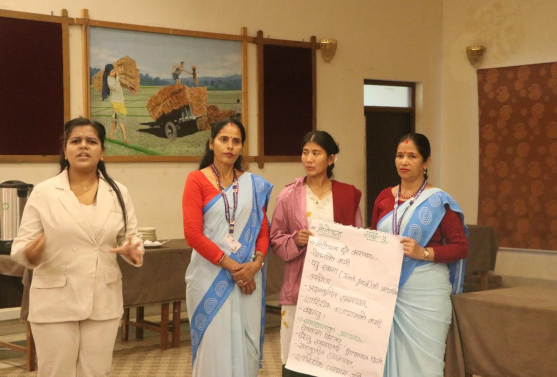
A total of 35 participants took part in the training, representing various sectors and
communities: Female Community Health Volunteers (FCHVs) – 17 (one from each ward of
Devchuli Municipality), Child Club Representatives – 4, Teachers – 2, Journalists – 2,
Government Officials – 4, Civil Society Representatives – 5, and one Elected Representative.
Considering the multi-sectoral dimensions of nutrition, representatives from the
Municipality’s Health Department, Nutrition Focal Persons, Education Sector, and local
stakeholders were also present. According to the organizers, the objective of the training was
to enhance knowledge and practices related to nutrition at the local level, ultimately
contributing to the improved health of mothers and children. Participants received practical
sessions on balanced diets, the importance of breastfeeding, nutrition for children under five,
and identification and solutions to nutrition-related problems in the community.
The four-day training emphasized maternal nutrition, child nutrition, and adolescent nutrition.
Participants engaged in hands-on sessions on preparing nutritious meals using local
resources, understanding the importance of balanced diets, and addressing the nutritional
requirements of different age groups.
The lead trainer, Mr. Sagar Parajuli, Public Health Officer at the Provincial Public Health Office,
Nawalparasi (Bardaghat Susta East), highlighted the importance of promoting local, seasonal,
and traditional foods. He stated, “The local, seasonal, and traditional food items found within
our communities are excellent sources of nutrition. Their proper use can significantly
contribute to reducing malnutrition.”
Similarly, Mr. Shiv Prasad Parajuli, Focal Person of Health Department of Devchuli
Municipality, raised awareness about the municipality’s current nutrition status and briefed
participants on the local government’s nutrition-related initiatives and programs.
During the same event, Mr. Tilottam Poudel, President of Jcycn, shed light on the role of child
clubs, emphasizing the strong interrelation between health and child rights. He emphasized
the need to enhance the activeness of child clubs as a medium to empower and raise
awareness among children. Likewise, Mr. Deepak Sharma, General Secretary of Jcycn, pointed
out that implementing an effective mid-day meal program at the school level could serve as a
strong strategy for improving child nutrition. He also highlighted the collective responsibility
of all stakeholders to make schools junk food-free zones. Mr. Nandalal Dhakal, the Education
Department Officer of Devchuli Municipality, stated that the role of FCHVs is crucial in
effectively implementing the municipality’s approved mid-day meal program. He urged FCHVs
to take a leading role in ensuring the management and monitoring of healthy meals in schools.
Mr. Pritam Karki, President of Jagriti Child Club Nepal, expressed his commitment on behalf
of the child club representatives, stating that they will work together to advance both ChildFriendly Local Governance (CFLG) and Nutrition-Friendly Local Governance (NFLG) in
coordination with the municipality and stakeholders.
Ms. Bidya Poudel, Municipal Nutrition Coordinator, encouraged all stakeholders and FCHVs to
work collaboratively for the effective implementation of nutrition-related programs.
According to her, implementing programs that align with the actual needs and context of the
target areas is the foundation for sustainable nutrition improvement.
On the other hand, Mr. Deepak Prashad Bashyal, Nepal Representative of KANALLAN,
emphasized the importance of using regional, seasonal, and organic food products for
nutritional health. He also emphasized the need to strengthen the skills and capacity of
Female Community Health Volunteers to identify and address nutritional issues at the
community level. He remarked, “Female Community Health Volunteers are the health
ambassadors of their communities, they are the frontline force for bringing behavioral
changes that improve nutrition.”
Likewise, Ms. Rita Thapa, Program Coordinator of Jcycn, explained about Nutrition-Friendly
Local Governance (NFLG) and the Multi-Sector Nutrition Plan (MSNP), stating that nutrition is
not only a concern of the health sector but rather the combined outcome of seven different
sectors. She described NFLG as a key strategic approach to motivate local governments to
take active and collective actions for nutrition improvement.
In the closing session, Mr. Reptti Kumar Gharti Magar, Chairperson of Ward No. 10 of Devchuli
Municipality, expressed his commitment to the municipality’s active role in nutrition-related
activities. He called upon all stakeholders, FCHVs, and School Management Committees to
work together for collective efforts. He said, “Improving the nutrition of children, mothers,
and the community is our shared responsibility. I invite all stakeholders to join hands in making
nutrition programs more effective and sustainable.”
Participants expressed their commitment to applying the knowledge gained and supporting
nutrition initiatives within their respective wards. The training also contributed to refining the
Nutrition Training Manual for future use in local nutrition programs.
According to the organizers, the training has strengthened participants’ awareness and sense
of multi-sectoral collaboration in nutrition. The program provided comprehensive knowledge
about the nutritional needs of children of different age groups, maternal nutrition, the
importance of local and seasonal foods, identification and solutions to malnutrition issues,
and multi-sectoral strategies for improving nutrition at the school and community levels.